
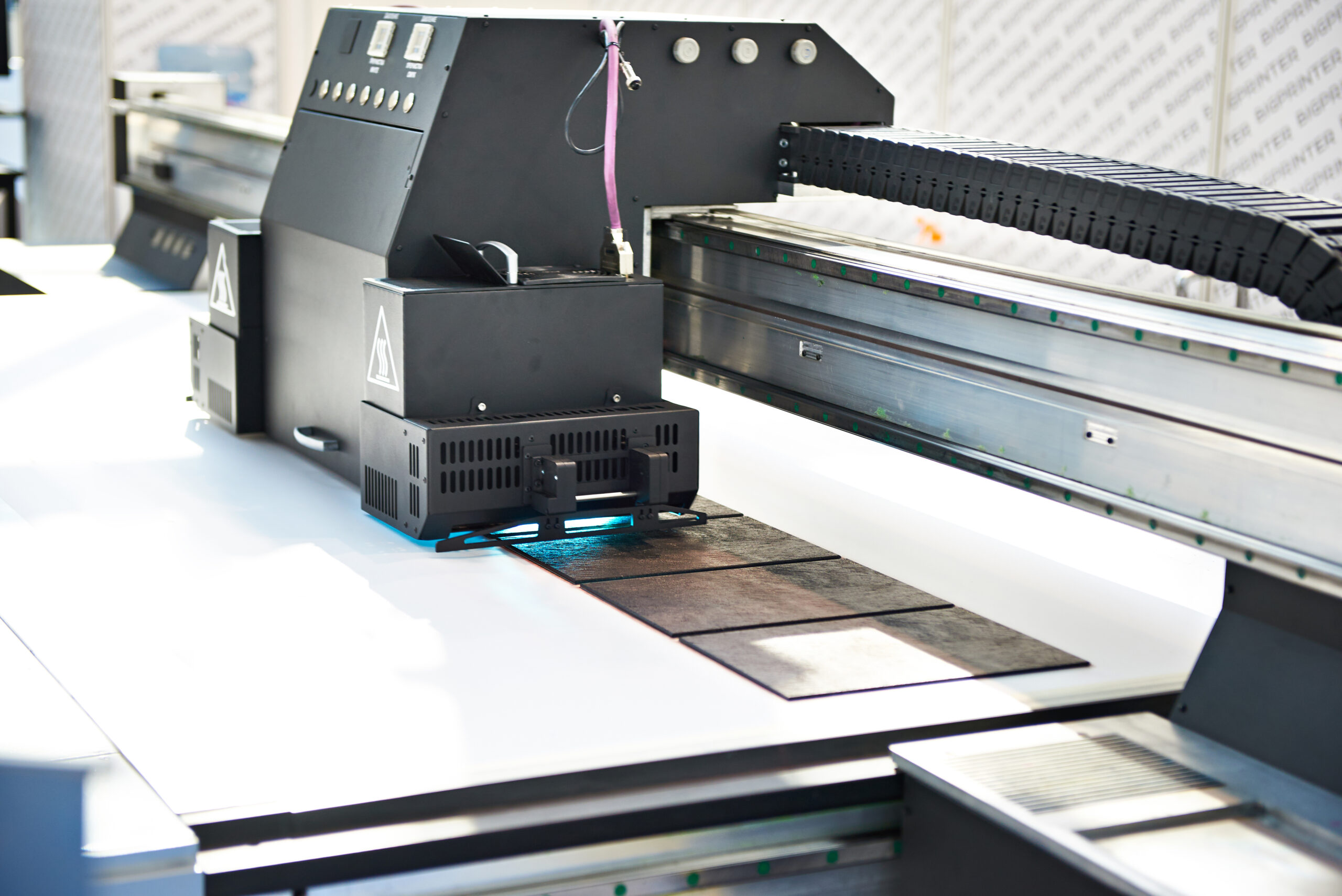
When it comes to professional printing solutions, Digital Technology Group, Inc.has long been a trusted name in the industry, offering a range of printers that cater to diverse needs. Among its impressive lineup is the Epson UV printer, a versatile machine designed to deliver high-quality, durable prints on a wide variety of materials. As more businesses seek advanced printing solutions for signage, promotional products, packaging, and other applications, Epson’s UV printers have emerged as a popular choice. However, like any advanced technology, these printers come with their own set of pros and cons. In this post, we will explore both the advantages and disadvantages of Epson UV printers, helping you determine whether it’s the right choice for your business.
What Is An Epson UV Printer?
Before diving into the pros and cons, it’s important to understand what a UV printer is and how it works. UV printers use ultraviolet light to cure or dry the ink as it is printed onto the material. This technology allows the ink to adhere to a wide variety of surfaces, including glass, metal, wood, plastic, and more, without smudging or fading. Epson UV printers are known for their precision and ability to produce high-resolution prints with vivid colors, making them ideal for businesses that need to print on non-traditional surfaces.
Now, let’s break down the advantages and disadvantages of using an Epson UV printer.
Advantages Of Epson UV Printers
Versatility In Substrate Printing
One of the key advantages of Epson UV printers is their versatility. These printers can print on a wide variety of substrates, including rigid and flexible materials such as acrylic, glass, wood, metals, leather, and even textiles. This feature makes Epson UV printers ideal for industries such as advertising, interior decoration, packaging, and product labeling, where custom printing on unconventional surfaces is a necessity.
With Epson UV technology, businesses can expand their printing offerings and cater to a broader range of customers looking for high-quality prints on diverse materials. This versatility gives a competitive edge to companies in industries requiring both functional and aesthetically appealing printing. Read Guide to the Epson V7000 UV Flatbed Printer to learn more.
High Print Quality
Epson UV printers are renowned for their high print quality. Equipped with Epson’s proprietary printheads and ink technology, these machines are capable of producing sharp, detailed images with vibrant colors and smooth gradients. The use of UV curing ensures that the ink adheres well to the surface, resulting in durable, high-definition prints that resist fading or smudging.
This is particularly advantageous for businesses involved in creating signage, promotional materials, or packaging, where high-resolution images and eye-catching colors are essential to capturing attention. Epson UV printers are often chosen for applications where precision and detail matter, such as printing on high-end retail displays or fine art reproductions.
Environmentally Friendly Technology
Epson UV printers use environmentally friendly ink systems, particularly when compared to solvent-based printers. UV inks produce less volatile organic compounds (VOCs), which are harmful to the environment and human health. Since the ink is cured instantly using UV light, there is also no need for drying time or heat, reducing energy consumption.
For businesses looking to adopt greener practices or comply with environmental regulations, Epson UV printers are a sustainable option. The quick curing process and lower emissions make it easier for companies to market themselves as environmentally responsible.
Durability Of Prints
One of the standout benefits of UV printing technology is the durability of the prints produced. UV-cured inks are resistant to scratches, fading, and moisture, making them ideal for outdoor signage and products that may be exposed to harsh environmental conditions. Unlike traditional printing methods, where ink can wear off or degrade over time, UV prints remain intact and vibrant for extended periods, even under direct sunlight.
For industries where longevity is key—such as automotive, architecture, and outdoor advertising—Epson UV printers offer a reliable solution that ensures the print’s quality remains consistent over time.
Faster Production Times
The UV curing process allows for faster production times compared to other printing methods. Since the ink dries almost instantly when exposed to UV light, there’s no need for additional drying time or processes. This is particularly beneficial for businesses with high-volume print jobs or tight deadlines, as it allows for quicker turnaround times.
In today’s fast-paced business environment, the ability to deliver products quickly without compromising on quality is a significant advantage. Epson UV printers streamline the printing process, enabling businesses to meet customer demands efficiently.
White Ink Capability
Many Epson UV printers come with white ink capability, which is a major advantage when printing on transparent or dark-colored substrates. The ability to print a white base layer allows for full-color designs to stand out vividly, even on challenging surfaces. This opens up creative possibilities for businesses involved in packaging, promotional products, or custom signage, where white ink can add a premium touch to the final product.
Disadvantages Of Epson UV Printers
High Initial Cost
One of the primary disadvantages of Epson UV printers is their high initial cost. These machines represent a significant investment, especially for small or medium-sized businesses. The price of an Epson UV printer can range from several thousand to tens of thousands of dollars, depending on the model and specifications.
For businesses with limited budgets, this upfront cost may be a barrier to entry. Additionally, UV printers require specific inks and maintenance, which can also contribute to ongoing operational expenses.
Maintenance Requirements For An Epson UV Printer
UV printers, including Epson models, require regular maintenance to ensure optimal performance. The printheads must be kept clean, and the UV lamps need to be replaced periodically. If not properly maintained, issues such as clogged nozzles or inconsistent curing can arise, which may affect print quality and lead to costly repairs.
While Epson provides comprehensive support and training for maintaining their UV printers, businesses must allocate time and resources for regular upkeep. Failure to do so can result in downtime or costly repairs, negatively impacting productivity.
Specialized Ink Costs
UV inks are more expensive than traditional solvent or aqueous inks. Epson UV printers require specific UV-curable inks, which are designed to work with the printer’s curing system. While these inks provide superior durability and print quality, the cost per liter is significantly higher than that of standard inks.
For businesses that produce high volumes of printed materials, the ongoing cost of ink can add up quickly. It’s important for companies to consider their printing volume and the cost of UV ink when evaluating the overall cost of ownership.
Limited Flexibility With Curved Surfaces
While UV printers are highly versatile in printing on flat surfaces, they may struggle with curved or highly textured substrates. Although some Epson models offer features to accommodate slightly curved surfaces, the technology is not designed for printing on heavily contoured or irregularly shaped items. This limitation can be problematic for businesses looking to print on 3D objects or products with complex shapes.
For those in industries such as promotional product manufacturing or automotive design, where printing on curved surfaces is common, this limitation may require the use of additional printing methods or equipment.
Size Of Printer
Epson UV printers, particularly those designed for large-format printing, can be quite large and require significant floor space. For businesses with limited space, finding a suitable location to house the printer may pose a challenge.
The size and weight of these machines also make them less portable, so they are generally best suited for fixed installations in dedicated print shops or industrial environments.
Conclusion
Epson UV printers offer a wide range of benefits, including exceptional print quality, versatility, durability, and environmental friendliness. For businesses involved in signage, packaging, promotional products, or other industries that require high-resolution printing on various substrates, an Epson UV printer can be a valuable asset. The ability to print on diverse materials with vivid colors and sharp details opens up new opportunities for creative and functional applications.
However, the high initial cost, specialized ink requirements, and maintenance demands may be limiting factors for smaller businesses or those with lower print volumes. Additionally, the technology’s limitations with curved surfaces and large size may not be suitable for all applications.
In evaluating whether an Epson UV printer is the right investment for your business, consider your printing needs, budget, and long-term goals. If you require high-quality, durable prints on a wide range of materials and have the resources to maintain the equipment, an Epson UV printer can offer significant advantages that help you stay competitive in your industry.
By understanding the pros and cons of Epson UV printers, you can make an informed decision and select the printing solution that best aligns with your business’s unique needs. Call Digital Technology Group, Inc. for more information.


